Skip to article
Best Practices

How to Scale Your Shopify Store to $1M/Year: The Complete Roadmap

A phase-by-phase playbook: $0-$10K (foundations), $10K-$50K (channels), $50K-$250K (automation), $250K-$1M (scaling). At each phase, what to focus on and what to automate.

SW

StoreWiz Team

Dec 21, 2025 · 20 min read

How to Scale Your Shopify Store to $1M/Year: The Complete Roadmap

TL;DR

Scaling a Shopify store to $1M/year ($83K/month) requires four distinct phases, each with different priorities: Phase 1 ($0-$10K/mo) is about product-market fit, Phase 2 ($10K-$50K/mo) is about building systems, Phase 3 ($50K-$100K/mo) is about automation, and Phase 4 ($100K+/mo) is about delegation and optimization. Most stores stall because they try to do Phase 3 work at Phase 1 — or refuse to do Phase 3 work at Phase 4. This roadmap shows you exactly what to focus on, what to automate, and what to hire for at each stage.

The $1M/Year Reality Check

Let us start with what $1M/year actually means in ecommerce terms:

Annual revenue target:
$1,000,000
Monthly revenue:
$83,333
Daily revenue:
$2,740
At $50 AOV, daily orders needed:
~55 orders/day
At 2.5% conversion rate, daily visitors:
~2,200 visitors/day
Typical net profit margin:
15-25% = $150K-$250K profit

Only about 5% of Shopify stores ever reach $1M/year. But it is achievable — and it does not require a massive team or millions in venture capital. What it requires is the right sequence of actions at the right time. That is what this roadmap provides.

Phase 1: $0 to $10K/Month — Product-Market Fit

Phase 1Timeline: 1-6 months

Primary goal: Prove people will pay for your product

Milestone: 30+ orders/month with repeat customers

What to Focus On

  1. Find your winning product

    Test 3-5 products with small ad budgets ($20-$50/day per product). Kill losers fast. Double down on winners. Your winning product has a 2%+ conversion rate and 3x+ ROAS.

  2. Nail your product page

    Professional photos (invest $200-$500), benefit-led copy, social proof (reviews, UGC), and a clear value proposition above the fold. This single page is where all your revenue comes from.

  3. Master one traffic source

    Do not spread yourself across Facebook, Google, TikTok, SEO, and influencers simultaneously. Pick one and get it to profitable before adding the next. Most Shopify stores start with Meta ads or TikTok ads.

  4. Set up basic email capture

    Pop-up with a 10-15% discount for email signup. Set up 3 automated flows: welcome series, abandoned cart, and post-purchase. These will generate 20-30% of revenue once established.

  5. Handle customer service yourself

    At this stage, YOU should be answering every customer email. This teaches you what customers love, hate, and ask about — information that makes everything else better.

What NOT to Do at This Stage

  • Do not build a massive product catalog — one hero product is enough
  • Do not hire anyone — you need to understand every part of the business first
  • Do not spend money on fancy tools — Shopify + Klaviyo + one ad platform is all you need
  • Do not focus on branding — product-market fit first, brand later
  • Do not compare yourself to established stores — they started where you are

Phase 1 Budget

Shopify plan$39/moProduct samples/inventory$500-$2,000Ad testing budget$500-$1,500/moEmail tool (Klaviyo free tier)$0Total monthly$540-$1,540

Phase 2: $10K to $50K/Month — Building Systems

Phase 2Timeline: 3-12 months

Primary goal: Build repeatable systems so growth does not depend on you

Milestone: Consistent daily revenue with documented processes for every function

What to Focus On

  1. Add a second traffic channel

    If Meta is working, add Google Shopping. If TikTok is working, add Meta. Two channels protects you if one has a bad month or policy change.

  2. Build out your email marketing

    Go from 3 basic flows to 8-10 automated flows: welcome, abandoned cart, browse abandonment, post-purchase, win-back, VIP, review request, cross-sell. Email should generate 25-35% of total revenue.

  3. Expand your product line

    Add complementary products that your existing customers will buy. This increases AOV and LTV without increasing acquisition cost. Bundles and subscriptions are powerful here.

  4. Implement proper analytics

    You need to know your exact CAC, LTV, and unit economics per product and per channel. Set up GA4, triple-check your ad platform attribution, and build a weekly KPI dashboard.

  5. Document everything

    Create SOPs for order fulfillment, customer service responses, ad management, and inventory ordering. You will need these when you start delegating in Phase 3.

  6. Optimize your supply chain

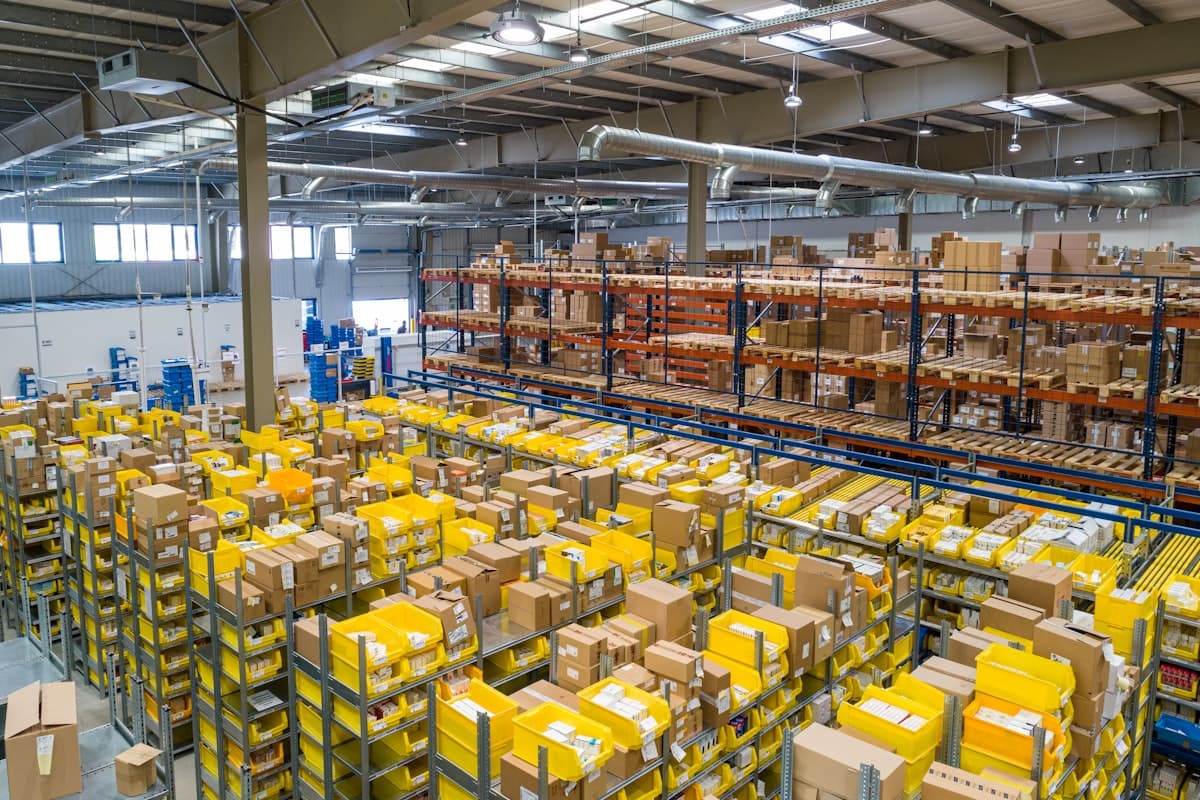
    Negotiate better rates with suppliers (volume discounts kick in), set up a 3PL if you are self-fulfilling more than 50 orders/day, and establish reorder points and safety stock.
Revenue Levers at This Stage

LeverImpactExample
Increase AOV+20-40% revenueBundles, upsells, free shipping threshold
Improve conversion rate+30-50% revenueBetter photos, social proof, faster site
Email marketing+25-35% revenueAutomated flows + weekly campaigns
Repeat purchase rate+40-80% LTVSubscriptions, loyalty program, remarketing

Phase 3: $50K to $100K/Month — Automation

Phase 3Timeline: 6-18 months

Primary goal: Automate repetitive tasks so you can focus on strategy

Milestone: Business runs day-to-day without you touching operations

What to Automate (In Order of Impact)

1

Inventory management and reordering

5-8 hrs/week saved

Automated reorder points, safety stock alerts, demand forecasting

2

Customer support (Tier 1)

10-15 hrs/week saved

AI chatbot handles FAQs, order status, returns. Only escalates complex issues.

3

Ad campaign optimization

8-12 hrs/week saved

AI bid management, budget reallocation, automated creative testing

4

Email marketing flows

3-5 hrs/week saved

Automated segmentation, dynamic content, send-time optimization

5

Social media content

5-8 hrs/week saved

AI content generation, auto-scheduling, engagement monitoring

6

Financial reporting

3-5 hrs/week saved

Automated P&L, cash flow forecasting, profit-per-SKU dashboards

7

Product listing optimization

4-6 hrs/week saved

AI-generated descriptions, automated A/B testing of titles and images

Total Automation Impact

Automating these 7 areas saves 38-59 hours per week — nearly a full-time employee. At $50K/mo revenue, this frees you to focus on strategy, product development, and partnerships that drive the next level of growth.

Platforms like StoreWiz handle all seven of these automation areas with coordinated AI agents, replacing the need for 5+ separate tools and manual processes.

Your First Hire (and When to Make It)

At $50K+/month, your first hire should be in the area where you are the bottleneck. For most store owners:

  1. If operations is the bottleneck: Hire an operations VA ($800-$1,500/mo)
  2. If marketing is the bottleneck: Hire a media buyer ($2,000-$4,000/mo) or agency
  3. If creative is the bottleneck: Hire a content creator ($1,500-$3,000/mo)

Rule of thumb: only hire when the role will either save you 20+ hours/week or directly generate 3x+ its cost in revenue. Otherwise, automate instead.

Phase 4: $100K+/Month — Delegation and Optimization

Phase 4Timeline: Ongoing

Primary goal: Build a team and optimize for profit, not just revenue

Milestone: $1M/year in revenue with 20%+ net profit margin

What Changes at $100K+/Month

At this stage, your challenges shift from “how do I grow?” to “how do I grow profitably?” Revenue growth without profit optimization leads to businesses that look successful but eat cash faster than they generate it.

The CEO Dashboard: 7 Numbers to Watch Daily

Daily revenueOn track for monthly target
Blended ROAS3x+ (all ad spend / all revenue)
Net profit margin15-25% after all expenses
Cash in bankEnough for 60+ days of runway
Inventory days on hand30-60 days for top SKUs
Customer acquisition costTrending down or stable
Repeat purchase rate25%+ within 90 days

Building Your Team

At $100K+/month, your typical team looks like this:

RoleTypeCostResponsibility
You (CEO)FounderOwner's drawStrategy, product, partnerships, vision
Ops Manager or VAFull or part-time$1,500-$4,000/moFulfillment, CS escalations, inventory
Media BuyerContractor or agency$2,000-$5,000/moPaid ads across Meta, Google, TikTok
Content CreatorContractor$1,500-$3,000/moUGC, product photos, social content
AI automation platformSoftware$49-$249/moEmail, analytics, reporting, inventory alerts

Optimization Strategies for $100K+/Month

  1. Negotiate better COGS

    At $100K+/month, you have volume leverage. Renegotiate with suppliers for 10-20% cost reductions. Every 5% COGS reduction adds 5% to your margin.

  2. Optimize for LTV, not just CAC

    A customer who buys 3 times is worth 3x what they cost to acquire. Invest in retention: subscriptions, loyalty programs, referral incentives.

  3. Add a multichannel strategy

    Sellers on Shopify + Amazon + one additional channel earn 190% more than single-channel sellers. At this scale, the complexity is manageable.

  4. Build a brand moat

    Community, content, and brand identity become your competitive advantage. Products can be copied; brands cannot. Invest in organic content, PR, and customer community.

  5. International expansion

    Shopify Markets makes international selling straightforward. Start with one new market (UK, Canada, or Australia) and expand from there.

Why Stores Stall (and How to Break Through)

Every growth stage has a common stall point. Knowing them in advance helps you push through faster.

$0-$10K/mo stall

Common cause: Testing too many products at once or giving up on ads before reaching statistical significance.

Fix: Commit to one product for 30 days with $50/day ad spend. You need 500+ visitors before drawing conclusions.

$10K-$50K/mo stall

Common cause: Founder does everything manually. No systems, no SOPs, no delegation.

Fix: Spend one week documenting every task you do daily. This documentation becomes the foundation for hiring and automation.

$50K-$100K/mo stall

Common cause: Cash flow crunch. Revenue is growing but profit is not, because COGS and tool costs grew faster.

Fix: Audit every subscription, renegotiate supplier rates, and consolidate your tool stack. A $200/mo unified platform can replace $1,200/mo in individual tools.

$100K+/mo stall

Common cause: Founder cannot let go of control. Micromanages team. Becomes the bottleneck.

Fix: Define the 3 things only you can do (strategy, product, partnerships). Delegate everything else with clear KPIs and weekly check-ins.

Revenue Milestones and Action Triggers

Use this as a quick reference. When you hit a milestone, execute the corresponding actions.

MilestoneActions to Take
First $1K monthProduct-market fit validated. Double ad spend. Set up email capture.
First $5K monthAdd automated email flows. Start second traffic channel testing.
First $10K monthSet up proper analytics. Expand product line. Negotiate with suppliers.
First $25K monthDocument all SOPs. Consider a 3PL. Implement inventory management system.
First $50K monthFirst hire. Automate operations. Add multichannel selling.
First $75K monthFull team in place. Optimize for profit margins. Consider international.
First $100K monthCEO mode. Focus on strategy and brand. Delegate all operations.

Key Takeaways

  • 1.$1M/year = ~$83K/month = ~55 orders/day at $50 AOV. It is achievable but requires the right sequence of actions at the right time.
  • 2.Phase 1 ($0-$10K/mo): Obsess over product-market fit. One product, one traffic channel, handle everything yourself.
  • 3.Phase 2 ($10K-$50K/mo): Build systems. Add channels, expand products, document processes. Email should generate 25-35% of revenue.
  • 4.Phase 3 ($50K-$100K/mo): Automate operations. AI tools can save 38-59 hours/week. Make your first hire only when automation is maxed out.
  • 5.Phase 4 ($100K+/mo): Delegate and optimize. Focus on profit margins, LTV, brand building, and strategic decisions only you can make.
  • 6.Every stage has a common stall point. Knowing them in advance lets you plan around them instead of being surprised.

Frequently Asked Questions

How long does it take to reach $1M/year on Shopify?

The median time is 18-36 months from launch. Some stores reach it in 6-12 months with a hot product and strong ad strategy. Others take 3-5 years building slowly through organic growth and brand building. The speed depends primarily on your product-market fit and how aggressively you invest in paid acquisition.

Do I need investors or outside funding?

No. Most $1M/year Shopify stores are bootstrapped. The key is managing cash flow: reinvest profits into inventory and ads, use revenue-based financing if needed for large inventory orders, and keep overhead low by automating before hiring. A lean operation hitting $1M/year with 20% margins generates $200K in profit without giving up any equity.

What is the biggest mistake sellers make when scaling?

Scaling ad spend before fixing their funnel. If your site converts at 1.5% and your product pages are mediocre, spending more on ads just amplifies the inefficiency. Fix your conversion rate first (better photos, faster site, more social proof), then scale ads. A store converting at 3% needs half the traffic of a store converting at 1.5% to hit the same revenue.

Should I focus on revenue or profit?

Both, but at different stages. In Phase 1-2, focus on revenue growth even if margins are thin — you need volume to learn what works. In Phase 3-4, shift focus to profit optimization. A $1M/year store at 5% margin ($50K profit) is less valuable than a $500K/year store at 25% margin ($125K profit). Revenue is vanity; profit is sanity; cash flow is reality.

SW

Written by StoreWiz Team

Growth Strategy

The StoreWiz team writes about ecommerce automation, AI operations, and growth strategies for modern online sellers. Our insights come from building technology that helps brands scale without scaling headcount.

Stay Ahead

Get pricing & growth strategies in your inbox

Join 2,000+ ecommerce operators getting weekly insights on autonomous commerce, pricing tactics, and AI growth.

No spam. Unsubscribe anytime.